Together with Gaëlle Chapuis, I have written a piece for The Transmitter about CON²PHYS (CONceptual CONsistency in electroPHYSiology), a project of the lab.
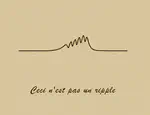
The story starts with ripples. At a hackathon we organized, 18 teams analyzed the same Neuropixels dataset to find which brain area showed the most hippocampal ripples. Their estimates ranged from almost none to ten per minute. Every team was skilled and every method was defensible, yet a ripple turned out to be whatever each detection pipeline decided it was. Magritte would have understood.
I am thrilled to announce that our lab has officially become an affiliate of the International Brain Laboratory!
This affiliation grows directly out of CON²PHYS (CONceptual CONsistency in electroPHYSiology), a collaborative project I have been involved in that aims to quantify and address the analytical variability problem in systems neuroscience. The IBL’s support of CON²PHYS, and their willingness to formalize our connection through this affiliation, means a great deal to the lab.

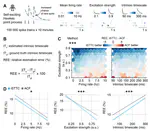
I am thrilled to share that our paper introducing iSTTC has just been published in PLOS Computational Biology! This work was led by Irina Pochinok, who drove the project from start to finish with great dedication and rigor. Congratulations Irina, well deserved!

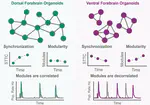
I am happy to share that a new paper from the Mostajo-Radji and Teodorescu labs at UC Santa Cruz has just been published in Stem Cell Reports: Establishing mouse forebrain organoids as models of intrinsic cortical network assembly. This work, led by Sebastian Hernandez and Hunter Schweiger, establishes dorsal and ventral mouse forebrain organoids as a platform to study how cellular composition, in particular the balance between excitatory and inhibitory neurons, shapes the self-organization of cortical networks.
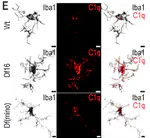
I am excited to share that we just published a study from my time in the Hanganu-Opatz lab in Hamburg: “Early rebalancing of neuroinflammatory cascades lastingly rescues prefrontal deficits in a 22q11.2ds model”. This project was led by Anne Günther, who did the bulk of the work and drove the study end-to-end.
CON²PHYS is now officially launched, and the full project is ready for submissions!
And the good news don’t finish here. In March, we will also run a dedicated CON²PHYS hackathon around COSYNE, co-organized with the International Brain Laboratory (IBL) software engineers and Irina Pochinok (from the Hamburg faction of the lab).
I am over the moon to share that our work on preconfigured neuronal firing sequences in human brain organoids has just been published in Nature Neuroscience: Preconfigured neuronal firing sequences in human brain organoids